Why I Built The Scope Optimizer™ and What I Wish I'd Known About Scoping Sooner
Article summary
Paula Gorman created The Scope Optimizer™ after learning firsthand how vague scopes of work, unclear boundaries, and poorly defined deliverables can erode consulting margins. Drawing on years of experience navigating scope creep, pricing challenges, and client expectations, she explains why even experienced consultants struggle with scoping and how The Scope Optimizer helps identify potential risks before agreements reach clients. The goal is to help independent consultants write stronger scopes, protect their profitability, and approach pricing with greater confidence.
When I started consulting, I was pretty good at the work itself. But writing scopes of work? Not so much.
In the early days, my scopes were vague. They were literally one page in most cases. I didn't have language in place to protect myself, I wasn't setting clear boundaries around revisions or additional work, and I left a lot of room for clients to interpret what was included.
And it cost me. A lot of margin, specifically.
I learned how to write better scopes the same way I learned a lot of things about running a consulting business: trial and error.
I'd run into an issue with a client, realize where I'd left myself exposed, and make sure I didn't make the same mistake on the next engagement.
Over time, I got better at defining deliverables, setting boundaries, and making sure my contracts accounted for things like change orders and work that fell outside the original agreement.
But it took time, and some of those lessons were expensive.
I figured other consultants shouldn't have to go through all of that to get it right.
The Scope Optimizer - Where the Idea Came From
Over the last couple of years, I've been toying with different product ideas, but nothing felt important enough to invest in.
Meanwhile, I was getting more and more questions from consultants about scoping and pricing.
How detailed should a scope be?
What do you do when a client wants to add something?
How do you make sure you're not committing to more work than you've priced?
And how do you know what to charge in the first place?
These questions weren't coming from people who were new to their fields. Many were experienced professionals who knew exactly how to deliver the work.
But just because we're experts at the value we bring to our clients, that doesn't mean we're experts at scoping.
I kept thinking about how useful it would have been to have some way to review my early scopes and point out what I was missing before I sent them to clients.
That's where the idea for Scope Optimizer came from.
I'd already worked with a development team to build my AI Business Coach, which has been a hit with consultants looking for help navigating the business side of consulting.
So I decided to work with them again, this time to build something specifically for scoping and pricing.
What The Scope Optimizer Does
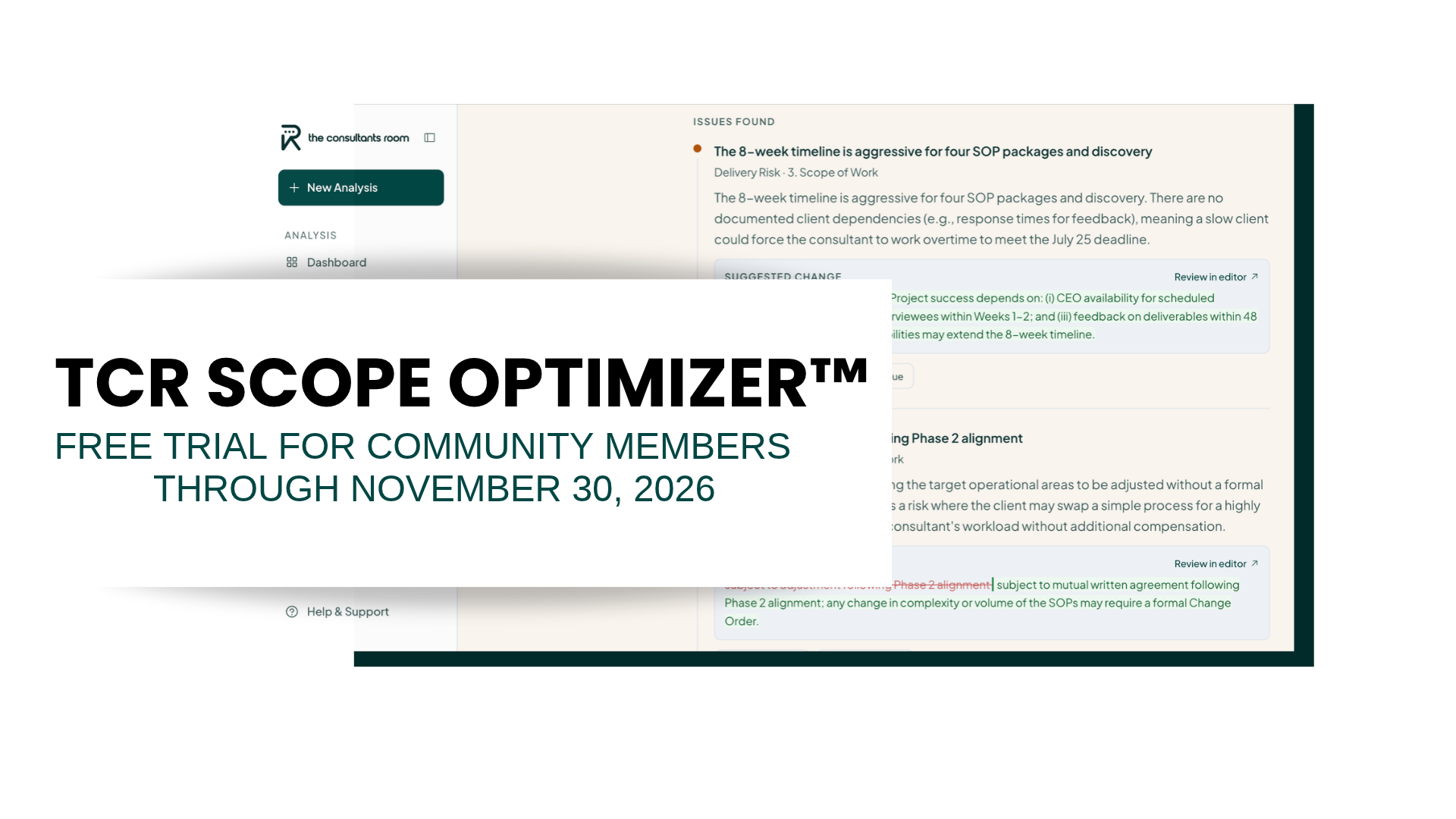
The idea is pretty simple. You upload a scope of work you've drafted, and the Scope Optimizer reviews it for areas that could create problems down the road.
It looks for things like:
Vague deliverables or language that could be interpreted differently by the client.
Missing boundaries around revisions, hours, or additional work.
Risks you're taking on that you may not have considered.
Areas where the client might make assumptions about what's included.
Pricing that may be out of line with available benchmarks.
It then suggests specific edits to strengthen your scope.
You can accept the suggestions, adjust them, or reject them. You're still making the decisions about what goes into your agreement.
Once you're happy with it, you can export the updated scope.
When you first sign up, you also create a profile with information about your consulting practice, including your industry, functional area, and years of experience. That gives the tool context about the kind of work you do, and it gets smarter about your practice over time.
My goal was to build something practical that consultants could use as part of their normal proposal process — not another thing to learn or a complicated process to follow.
And Then There's Pricing…
Scoping and pricing are closely connected.
If you haven't clearly defined what you're delivering, it's pretty difficult to know whether you've priced the work appropriately.
Even when you have a solid scope, pricing can be hard.
One of the biggest challenges for independent consultants is the lack of reliable pricing data.
What are other consultants charging for similar work?
How should your experience, industry, and the complexity of the engagement influence your fees?
How do you know if the number you're putting in front of a client is reasonable?
There's no straightforward answer and pricing will always require some judgment, but this is one of the areas I'm most excited about continuing to develop within The Scope Optimizer.
What I Hope this Changes for Consultants
I created The Scope Optimizer because I know what it's like to be really good at the work you're being hired to do and still struggle with the business side of consulting. And after years of writing scopes, negotiating contracts, and figuring out what works (and what doesn't), I know how much difference a well-written scope can make. It's not just about avoiding scope creep, it's about being clear with your clients, managing expectations, protecting your margins, and feeling confident about what you're agreeing to deliver.
I don't expect a tool to replace a consultant's judgment. Every engagement is different and there are decisions only you can make. But I do think it can help you spot things you might have missed, ask better questions, and avoid some of the mistakes I made along the way.
That's really what I want The Scope Optimizer to do – to help consultants feel more confident about their scopes and pricing, without having to figure everything out through trial and error.
Ready to Strengthen Your Scopes?
The Scope Optimizer™ is available inside The Consultants Room, Paula Gorman's community for independent consultants. Right now, members can try The Scope Optimizer free through November 30, 2026.
Join The Consultants Room to access the tool, strengthen your scopes of work, and get the support you need to build a more profitable consulting business.
FAQ
What is The Scope Optimizer™?
The Scope Optimizer™ is an AI-powered tool created by Paula Gorman to help consultants review and strengthen their scopes of work. It identifies vague deliverables, missing boundaries, potential risks, and pricing considerations, then recommends edits that consultants can review before sending agreements to clients.
How can consultants prevent scope creep?
Preventing scope creep starts with a clearly written scope of work. Consultants should define deliverables, establish boundaries around revisions and additional work, clarify client responsibilities, and document how changes to the original agreement will be handled. The Scope Optimizer helps identify areas where these protections may be missing.
What should be included in a consulting scope of work?
A consulting scope of work should clearly describe the project's objectives, deliverables, timeline, responsibilities, assumptions, and fees. It should also address revisions, exclusions, dependencies, and the process for approving additional work. The level of detail will vary depending on the engagement.
How does a scope of work affect consulting profitability?
A poorly defined scope can lead to unplanned work, additional revisions, and client expectations that exceed the original agreement. When consultants clearly define what they're delivering and establish boundaries around additional requests, they can better manage their time, protect their margins, and price engagements more accurately.
Can The Scope Optimizer help with consulting pricing?
The Scope Optimizer reviews pricing considerations alongside the proposed scope of work, including potential differences between fees and available benchmarks. Pricing still requires professional judgment based on experience, project complexity, industry, and the value of the engagement. Paula Gorman is continuing to develop the tool's pricing capabilities.
Does The Scope Optimizer replace a consultant's judgment?
No. The Scope Optimizer is designed to support consultants, not make decisions for them. It identifies potential issues and suggests improvements, but consultants decide which recommendations to accept, modify, or reject before finalizing their agreements.