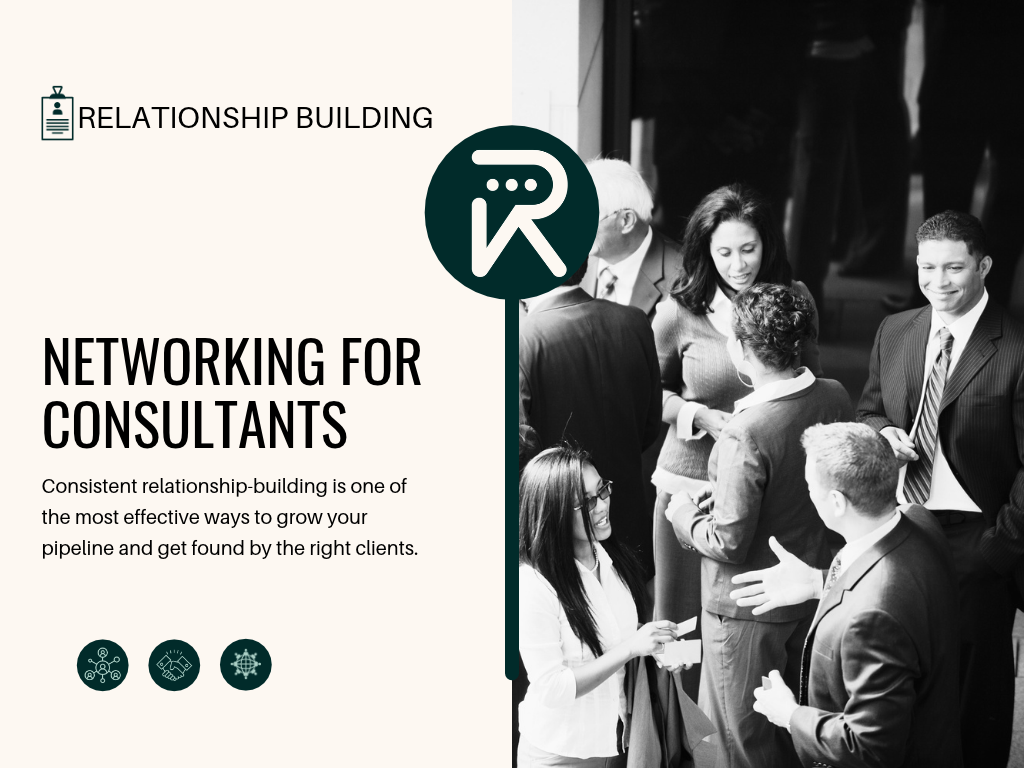
Article Summary
Networking doesn't have to feel awkward, intimidating, or salesy. For independent consultants and freelancers, building a successful business is often less about pitching your services and more about building genuine relationships and staying visible. Learn how to approach networking with curiosity, reconnect with your existing network, expand your circle, share your expertise, and build meaningful connections that can lead to new consulting opportunities. Discover why consistent relationship-building is one of the most effective ways to grow your pipeline and get found by the right clients.
Networking is not pitching. Let's reframe it with approachable ways to build real relationships that lead to consulting work
Networking gets a bad reputation, mostly because people confuse it with pitching.
It’s not.
If you’re building a consulting business, networking is your oxygen. Most projects come from someone who already knows your work, trusts your judgment, or has heard your name in the right conversation.
The trick is to reframe it: networking isn’t about asking for anything, it’s about connecting, listening, being curious, and showing up where your expertise is useful.
Here are a few ways to make networking feel natural and maybe even fun:
Reconnect and be curious. Reach out to people who already know your work. Instead of asking for leads, ask what they’re working on, what’s changing in their world, and where they’re feeling stuck. Listening well will teach you more than pitching ever will.
Expand your circle with intention. Be genuinely excited to meet new people in your field. Every conversation is a chance to understand real pain points, learn how others are adapting, and spot opportunities to collaborate.
Share what you’re learning. When you post about client projects, insights, or frameworks that solved a specific problem, you’re not “marketing,” you’re helping others see how you think and what you care about.
Follow up and keep the dialogue going. A simple thank you or a quick note about something you discussed builds trust and keeps you top of mind. Even better, send out monthly newsletters to build on your thought leadership.
When you approach networking as connection and curiosity, it stops feeling like a chore. People are usually happy to give you their time and each chat becomes a mini masterclass in how to better articulate your value in language your clients actually recognize.
Most consultants who struggle to find clients don’t have a marketing problem, they have a visibility problem. And visibility grows through connection, not cold outreach spam.
Start small. A message a day is a pipeline strategy.
FAQ
Why is networking important for independent consultants and freelancers?
Networking helps independent consultants build visibility, establish trust, and create relationships that can lead to new business opportunities. Many consulting projects come through referrals, existing relationships, and word of mouth rather than traditional marketing or cold outreach.
How can I network without feeling like I'm selling myself?
Shift your mindset from pitching to connecting. Focus on being curious, asking questions, listening to what others are working on, and finding ways to have meaningful conversations. Networking is about building relationships, not immediately asking someone to hire you.
How do I start networking if I already have an established professional network?
Start by reconnecting with people who already know you and your work. Reach out to former colleagues, clients, and industry contacts to see what they're working on, what's changing in their businesses, and where they might need support. These existing relationships are often a natural starting point for new opportunities.
How can I expand my professional network as a consultant?
Look for opportunities to connect with people in your industry, attend relevant events, participate in online communities, and engage with others who share your professional interests. Approach each interaction with genuine curiosity and an interest in learning rather than focusing on what you can get from the relationship.
How can sharing content help me find consulting clients?
Sharing insights, lessons from client projects, industry perspectives, and frameworks you've developed demonstrates how you think and the value you bring. Consistent content helps potential clients understand your expertise and builds credibility before they ever reach out.
How often should independent consultants network?
Consistency matters more than volume. Even reaching out to one person a day can help build and maintain relationships over time. Small, regular efforts are often more sustainable and effective than occasional bursts of networking activity.
How do I follow up after a networking conversation?
Send a simple thank-you message referencing something specific from your conversation. You can also share a relevant resource, introduce them to someone in your network, or follow up on something they mentioned. The goal is to keep the relationship going without making every interaction transactional.
Is networking more effective than cold outreach for finding consulting clients?
For many consultants, relationship-based networking can be particularly effective because trust and credibility are important factors in hiring decisions. Referrals, existing relationships, and professional visibility can create warmer opportunities than unsolicited pitches. Cold outreach can still have a place, but it doesn't need to be the foundation of your business development strategy.
How can I stay visible to potential consulting clients?
Stay connected with your professional network, share valuable content, participate in relevant conversations, and consider sending a regular newsletter. Consistent visibility helps people remember your expertise when a need or opportunity arises.